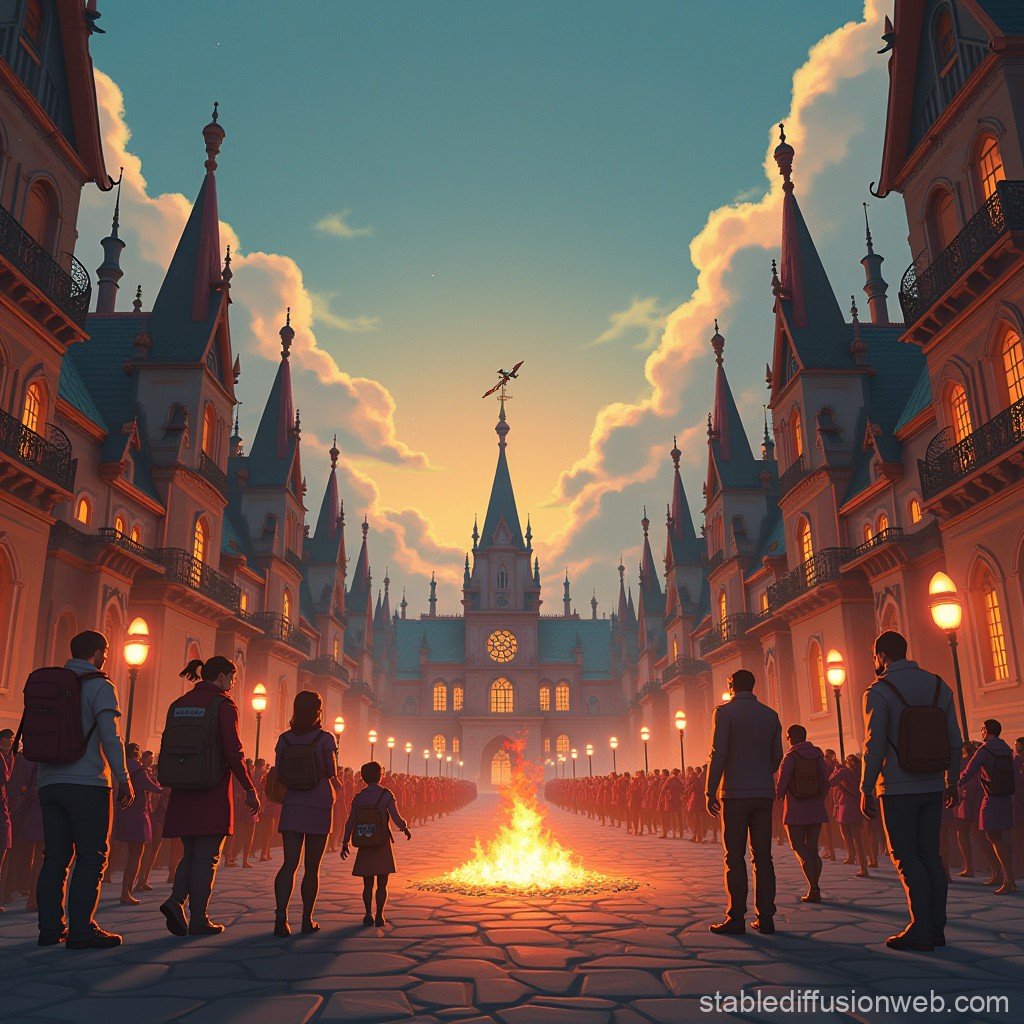
The digital canvas of anime art is exploding, driven by artificial intelligence. From the nostalgic aesthetics of hand-drawn classics to cutting-edge digital styles, exploring diverse anime art styles with AI is no longer a futuristic concept—it's today's reality, revolutionizing how creators bring their visions to life. This fusion of traditional artistry with advanced algorithms is unlocking unprecedented creative power for artists and studios worldwide, transforming the animation landscape.
At a Glance: Your Guide to AI-Powered Anime Art
- AI is revolutionizing anime art, enabling rapid, cost-effective creation of highly diverse visuals, from characters to entire worlds.
- Key AI technologies include Diffusion Models for consistent character keyframes, Generative Adversarial Networks (GANs) for seamless style transfer, and Large Language Models (LLMs) for interpreting complex creative prompts.
- AI can faithfully recreate and reimagine a vast spectrum of anime styles, including classic eras, modern sensibilities, niche aesthetics, iconic shonen and shojo tropes, detailed cyberpunk, and fantastical isekai worlds.
- Platforms like ReelMind.ai are at the forefront, offering extensive AI model libraries, multi-image fusion for character consistency, and even AI agent directors like "Nolan" to guide the creative process.
- Practical applications range from dramatically streamlining professional animation production workflows to empowering independent creators to produce high-quality visuals without massive teams or budgets.
- The future sees evolving AI models with greater nuance, personalized styles tailored to individual artists, and human artists increasingly acting as directors and curators, guiding AI tools.
A New Dawn for Anime: Where Art Meets Algorithms
Imagine bringing any anime vision to life, not just faster, but with an astounding depth of visual styles previously requiring immense artistic teams and years of training. That's the promise AI is delivering to the global animation market, which is projected to soar past $50 billion by 2027. This boom fuels an insatiable demand for unique, compelling visual aesthetics, a demand that AI is uniquely positioned to meet.
By 2025, the synergy between traditional anime artistry and AI is ushering in an era of unparalleled generative diversity. AI models now empower creators by synthesizing and mimicking artistic sensibilities, allowing for the rapid and variable creation of visuals. What does this mean for you? It means unprecedented freedom to experiment, to blend disparate styles, and to produce high-quality animation that once seemed out of reach.
At its core, AI's ability to replicate, blend, and invent novel anime aesthetics with previously unimaginable detail and consistency is democratizing high-quality animation production. Independent creators can now stand shoulder-to-shoulder with large studios, exploring diverse visual narratives that captivate audiences and forge strong brand identities. A critical differentiator for modern AI is its capacity for maintaining consistent character keyframes across multiple scenes, styles, and even themes – a monumental leap for visual storytelling.
The AI Toolbox: How Machines Learn to Draw Anime
Understanding the magic behind AI-generated anime art starts with a glimpse into the sophisticated technologies that power it. These aren't just simple filters; they are complex algorithms trained on vast datasets of existing art, learning the intricate rules of aesthetics, composition, and character design.
Diffusion Models: The Maestros of Consistency
At the heart of many leading AI art generators are Diffusion Models. Think of them like a reverse sculptor. They start by taking a training image and systematically adding "noise" to it, slowly obscuring the original until it's just static. Then, they learn to reverse this process, precisely denoising the image step by step until the original artwork reappears. This "learning to denoise" process is what enables them to generate entirely new images that adhere to learned patterns and styles.
For anime, Diffusion Models are crucial for achieving consistent character keyframes. By understanding how to "reconstruct" an image with incredible precision, they can generate the same character across different poses, expressions, and scenes while maintaining their core design. This consistency is often controlled through precise textual prompts, where you tell the AI exactly what you want to see.
Generative Adversarial Networks (GANs): The Style Transfer Wizards
Generative Adversarial Networks (GANs) operate on a unique "adversarial" principle, involving two neural networks: a generator and a discriminator. The generator creates new images, trying to fool the discriminator into believing they are real. The discriminator, in turn, tries to distinguish between real images and those created by the generator. This constant feedback loop hones both networks, allowing the generator to produce increasingly realistic and stylistically consistent artwork.
GANs particularly excel at style transfer, a technique where the artistic style of one image or dataset (e.g., a specific anime artist's portfolio) is applied to the content of another (e.g., your character design). This capability makes GANs invaluable for artists looking to experiment with different anime aesthetics, applying a consistent look across a series of images, or simply pushing stylistic boundaries.
Large Language Models (LLMs): The Semantic Interpreters
While Diffusion Models and GANs handle the visual generation, Large Language Models (LLMs) are the intelligent bridge between human creativity and machine execution. When you type a prompt like "a Studio Ghibli-inspired fantasy landscape with a flying castle and lush forests, soft colors," it's an LLM that interprets this complex textual instruction.
LLMs provide deep semantic understanding, translating your intent, mood, and granular details into actionable instructions for the image generation models. They understand not just keywords, but the relationships between them, the nuances of artistic styles, and the emotional tone you're aiming for. This allows for incredibly precise and intuitive prompting, giving creators an unprecedented level of control over the AI's output.
From Pixels to Palettes: The Broad Spectrum of AI-Generated Anime Styles
One of the most exciting aspects of AI in anime is its ability to traverse and create across an astonishing range of visual styles. No longer limited by a specific artist's hand or a studio's established aesthetic, AI opens up a universe of creative possibilities.
Classic Eras Reimagined: A Nod to Nostalgia
AI allows us to journey back in time, mimicking and interpreting the beloved styles of yesteryear. Imagine chunky mechanical designs reminiscent of the 1970s and 80s anime, much like the iconic Mobile Suit Gundam series, brought to life with modern fidelity. Or perhaps the expressive character art and lush, hand-painted backgrounds characteristic of Studio Ghibli's masterpieces from the 1990s and early 2000s, all generated with AI's generative power. It's a way to pay homage to the classics while giving them a fresh, contemporary twist.
Modern and Contemporary Anime Visuals: Capturing Today's Trends
AI effortlessly captures the current sensibilities of popular anime genres. Whether it's the fantastical worlds of isekai, the intricate storylines of science fiction, or the relatable charm of slice-of-life narratives, AI can recreate the sharp lines, expressive eyes, nuanced facial expressions, and fluid movements that define today's anime. Even intricate background details, often a time-consuming element in traditional animation, can be generated with striking accuracy and beauty.
Niche and Experimental Anime Aesthetics: Pushing Boundaries
Beyond mainstream styles, AI thrives in exploring the niche and experimental. This includes aesthetics inspired by indie animation, avant-garde art movements, or even blending anime with other artistic disciplines. Picture anime characters rendered in a watercolor painting style, or entire scenes composed with a retro pixel art aesthetic. These unique fusions allow for truly novel visual experiences, expanding the very definition of what anime can look like.
Iconic Shonen and Shojo Tropes: Dynamics and Delicacy
AI is adept at generating the distinct visual languages of specific anime demographics. For shonen, AI can mimic dynamic action poses, bold lines, energetic character designs, and dramatic effects that accentuate powerful attacks or emotional outbursts. For shojo, it specializes in softer, more elegant character designs, often featuring large, expressive eyes and intricate details in hair, clothing, and backgrounds, perfect for conveying deep emotions and romantic narratives.
Cyberpunk and Sci-Fi Anime Visuals: Worlds of Tomorrow
The gritty, neon-drenched future of cyberpunk and sci-fi anime is a playground for AI. It can create breathtakingly detailed, futuristic cityscapes, from sprawling megacities bathed in holographic advertisements to intricate technological designs for vehicles, weaponry, and cybernetic enhancements. The AI understands the blend of advanced tech and urban decay, rendering scenes with both awe-inspiring scale and intricate grittiness.
Fantasy and Isekai Anime Aesthetics: Journeys into the Unknown
For genres like fantasy and isekai, AI generates diverse visuals for magical elements, mythical creatures, and richly imagined worlds. This includes detailed character designs for archetypes like brave knights, enigmatic mages, and cunning rogues, as well as fantastical environments ranging from enchanted forests and towering castles to alien landscapes and hidden dungeons. The AI's ability to maintain consistency across these complex visual elements is a game-changer for world-building.
Pioneering the Future: Innovations in AI Anime Generation
The rapid evolution of AI isn't just about what it can create, but how it empowers creators. Platforms are emerging that push the boundaries of what's possible, offering sophisticated tools that act as true creative partners.
ReelMind.ai: Your Creative Co-Pilot
ReelMind.ai stands at the forefront of this revolution, offering a suite of advanced tools designed to streamline and elevate the anime creation process. It's more than just a generator; it's a comprehensive ecosystem for digital artists and animators.
- Extensive AI Model Library: ReelMind.ai provides access to over 101 diverse AI models. This includes specialized series like their Flux Series, renowned for its quality and precise control, alongside powerful video generation models like Runway Gen-4 & Gen-3. These latter models are specifically engineered for generating video content with consistent characters and cinematic quality, making professional-grade animation accessible.
- Multi-Image Fusion: A persistent challenge in AI-generated animation has been maintaining a character's consistent appearance across different scenes, poses, and styles—often called "character drift." ReelMind.ai's Multi-Image Fusion feature tackles this head-on. By using reference images to guide the AI, it ensures your character's appearance, attire, and expressions remain consistent, no matter how much the scene or style changes.
- Nolan: The World's First AI Agent Director: Imagine having an intelligent creative partner for your animation project. Nolan is just that—an AI agent providing intelligent direction, offering creative suggestions, guiding scene composition, and even advising on narrative structure. It can automate cinematography suggestions, acting as a co-pilot that helps refine your vision and execute it with professional flair.
Bringing Anime to Life: Practical Applications of AI
The impact of AI on anime art styles isn't just theoretical; it's transforming practical aspects of animation production and empowering a new wave of creators. These tools are democratizing the ability to create stunning visuals, fundamentally shifting workflows and opening up creative avenues previously thought impossible. For those interested in the broader scope of how these tools operate, understanding an AI anime image generator provides insight into the underlying technology.
Streamlining Animation Production Workflows
For established studios, AI represents a massive leap in efficiency. It significantly reduces production costs and timelines by generating initial concepts, stylistic variations, and essential assets in a fraction of the time conventional methods would require. Processes like background generation, storyboarding, and even generating character pose variations can be automated or heavily assisted by AI, allowing human artists to focus on high-level creative direction and refinement. This means more projects can be completed faster, and with greater artistic flexibility.
Empowering Independent Creators
Perhaps one of AI's most profound impacts is the democratization of animation production. AI tools enable individuals and small teams to create high-quality visuals without the need for large animation teams or prohibitive budgets. A single artist can now conceptualize, generate, and animate scenes with a fidelity that was once the exclusive domain of major studios. Furthermore, platforms like ReelMind.ai allow creators to train and publish their own custom AI models, offering a path to earn credits and potentially monetize their unique artistic styles.
Fostering Artistic Experimentation
AI is a powerful catalyst for artistic experimentation. It enables rapid iteration and exploration of visual approaches, allowing artists to blend disparate styles—imagine a Studio Ghibli character rendered in a gritty cyberpunk aesthetic��and create entirely new aesthetic paradigms. This boundless capacity for experimentation pushes creative boundaries, encouraging artists to venture into uncharted visual territories and discover truly unique forms of expression.
Craft Your Own Anime Masterpiece with AI
The exciting news is you don't need to be a coding genius or an industry veteran to start creating your own AI-generated anime art. Platforms like NightCafe.studio provide user-friendly interfaces that make the process accessible to everyone. Here's a quick guide to getting started:
A Walkthrough with NightCafe.studio:
- Describe Your Anime Vision: The first step is to articulate your creative vision. Input a detailed prompt describing the desired style, character designs, color palettes, background elements, and the overall mood you're aiming for. The more specific you are, the better the AI can interpret your intent.
- Examples:
- "A cyberpunk samurai in a neon-lit Tokyo alley, raining, intricate armor, reflective puddles, anime style, high detail, volumetric lighting."
- "A cute magical girl casting a spell, pastel colors, glowing effects, cherry blossoms in background, shojo manga style, dreamy atmosphere."
- "A stoic knight fighting a dragon in a dark fantasy forest, dramatic lighting, detailed scales, epic anime style."
- Generate Your Anime Art: Once your prompt is ready, simply click "Generate." The AI will then process your description, drawing upon its vast training data to create a unique piece of artwork that aligns with your vision. This process usually takes a few moments.
- Download or Share Your Creation: After the AI has finished generating your image, you'll have the option to download the high-resolution artwork directly. You can also share your creation with the vibrant NightCafe community, gather feedback, and inspire others with your imaginative work.
Tips for Effective Prompting:
- Be Specific: Instead of "anime girl," try "a mischievous anime girl with long silver hair and bright emerald eyes, wearing a futuristic school uniform."
- Use Keywords: Incorporate keywords related to specific anime styles ("shonen," "shojo," "mecha," "chibi"), moods ("gritty," "ethereal," "energetic"), or artistic influences ("Makoto Shinkai style," "Studio Ghibli aesthetic").
- Experiment with Descriptors: Play around with terms for lighting, composition, color palettes, and emotions to guide the AI towards your desired outcome.
The Horizon of Anime Art: What's Next for AI and Creativity
The journey of AI in anime art is just beginning. As these technologies continue to evolve, we can anticipate even more sophisticated capabilities and a deeper integration into the creative process.
Evolving AI Models: Beyond the Visuals
By July 2025, expect AI models to exhibit even greater nuance and control. This includes a more profound understanding of emotional depth, atmospheric subtlety, and complex light and shadow interplay. Advances will likely include enhanced non-destructive training approaches, allowing artists to refine AI models without losing previous progress, and more intuitive prompting via LLMs that can grasp highly abstract creative concepts with ease. These developments will enable AI to move beyond mere aesthetic generation to truly capture the soul of a narrative.
Personalized Anime Art Styles: Your Unique Signature
Imagine an AI that learns your unique artistic preferences, understanding not just what you like, but how you express it. The future will see AI models capable of being trained on an individual creator's own artwork or personal inspirations, allowing them to generate truly unique visual identities. This means AI could become an extension of an artist's hand, creating visuals that perfectly align with their signature style, offering an unparalleled level of personalization in the creative process.
The Evolving Role of Human Creativity: Director, Not Just Artist
As AI tools become more powerful, the role of the human artist won't diminish; it will evolve. Human artists will increasingly act as directors, curators, and conceptualizers, guiding AI tools with their vision and expertise. Their critical role in storytelling, understanding emotional nuance, and exercising aesthetic judgment will remain paramount. In this collaborative future, AI handles the heavy lifting of generation and iteration, while the human mind provides the creative spark, the narrative direction, and the artistic soul that truly resonates with audiences.
Your Journey into AI Anime Art
The world of anime art is undergoing a monumental transformation, and AI is your ticket to exploring its vibrant new frontiers. Whether you're a seasoned animator, an aspiring artist, or simply a fan with a vivid imagination, these tools offer an unprecedented opportunity to create, innovate, and contribute to the rich tapestry of anime culture. Dive in, experiment, and let your imagination take flight—the future of anime art is yours to shape, one AI-generated masterpiece at a time.