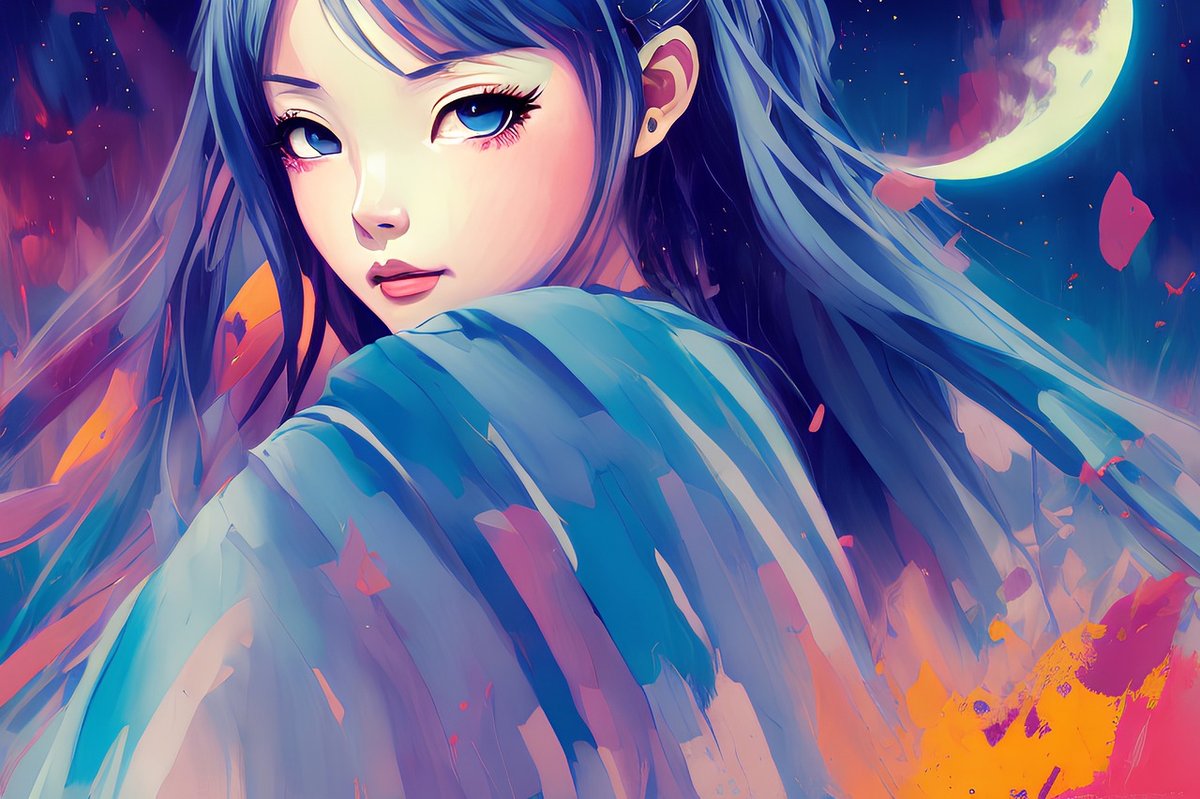
The world of visual storytelling is undergoing a profound transformation, with AI-generated visuals now a common sight across social media and creative platforms. At the forefront of this revolution are Creative Projects & Applications for AI Anime Art, democratizing the ability to produce stunning, anime-inspired illustrations with unprecedented speed and consistency. Whether you're a budding artist, a seasoned professional, or a content creator eager to bring your visions to life, AI anime art tools offer a vibrant new canvas.
Gone are the days when producing high-quality anime art demanded years of dedicated drawing practice. Today, advanced AI models allow anyone to conjure detailed characters, dynamic scenes, and entire visual narratives with just a few well-chosen words. This isn't just a technological marvel; it's a creative superpower, unlocking new possibilities for personal expression, professional ventures, and engaging audiences like never before.
At a Glance: Key Takeaways for AI Anime Art
- Democratizes Creation: Produce professional-quality anime art without traditional drawing skills.
- Vast Style Palette: Access dozens of distinct anime styles, from Ghibli-esque whimsy to gritty cyberpunk, with precise control.
- Character Consistency: Maintain a character's appearance across multiple poses, expressions, and scenes—essential for storytelling.
- Accelerates Workflows: Speed up concept art, storyboarding, and asset creation for various creative projects.
- Unlocks New Applications: Ideal for webcomics, visual novels, game assets, branding, merchandise, and personal art exploration.
- Prompting is Key: Mastering descriptive and iterative prompts is crucial for achieving desired results.
- Human Direction Remains Paramount: AI is a powerful tool, but your creative vision and artistic decisions are still the driving force.
The AI Anime Art Revolution: A New Creative Horizon
Imagine having an entire animation studio's talent at your fingertips, ready to interpret your every whim into a beautiful, anime-styled illustration. That's the promise of AI anime art generators. These advanced tools, powered by sophisticated deep learning algorithms like Generative Adversarial Networks (GANs) and diffusion models, have been trained on millions of anime illustrations. They understand not just how to draw, but how to emulate the stylistic nuances that define anime.
What does this mean for you? It means an accessible entry point into a world of visual creation that was once reserved for skilled illustrators. For beginners, it’s a sandbox for learning anime aesthetics, composition, and developing a visual vocabulary. For professional artists and illustrators, it's a potent accelerator, helping you rapidly develop concepts, explore style variations, generate reference poses, and overcome those pesky creative blocks. Content creators, from YouTubers to streamers, writers, and game developers, can now quickly and consistently produce custom thumbnails, channel art, character designs, and a wealth of other visual assets. The barrier to entry has never been lower, yet the potential for high-quality output has never been higher.
Mastering the Styles: Your AI Anime Art Palette
One of the most exciting aspects of AI anime art is the sheer breadth of styles it can emulate. Think of it as having an entire library of art techniques at your disposal, each waiting for your command. Understanding these styles and how to prompt for them is fundamental to bringing your specific vision to life.
AI generators support a remarkable range, allowing you to tailor the mood, detail, and overall aesthetic of your art. Here's a look at some prominent styles and their ideal applications, drawing from the vast possibilities:
Expressive Character Styles: Emotion and Personality
- Romantic/Shoujo: Characterized by soft colors, delicate features, expressive, often shimmering eyes, and flowing hair, often with sparkles or soft lighting. This style is perfect for love stories, magical girl concepts, and emotional character portraits that tug at the heartstrings. Think of elegant golden hours, blushing characters, and flower petals.
- Prompt Examples: "Soft Pastel Couple Anime, dreamy pink lavender hues, hazy aesthetic, peaceful airy clouds, romantic sunset," or "Romance Shoujo Couple Anime, sparkling flower petals, blushing bishounen, elegant golden hour, sweet dreamy love."
- Action/Shounen: Defined by bold features, dynamic poses, vibrant energy effects, strong line work, dramatic angles, and powerful expressions. This is your go-to for battle scenes, heroic characters, and high-octane adventure themes.
- Prompt Examples: "Action Male Shounen Anime, high-speed energy, power impact debris, intense battle aura, lightning fire," or "Sci-fi Male Anime against Aliens, futuristic space battle, cinematic bolts."
- Chibi & Kawaii: Known for oversized heads, simplified features, playful proportions, exaggerated expressions, and charming simplicity. These styles excel at evoking cuteness and humor, making them perfect for stickers, emotes, merchandise, and lighthearted content.
- Prompt Examples: "Small, Cute: Big eyes, tiny, adorable, simplified, round, pastel, expressive, mascot," or "Cute Kawaii Little Girl Anime, sweet, pink, hearts, sparkles, bubbly, happy, food, animals, plush, pastel."
World-Building Styles: Immersive Environments and Lore
- Ghibli: Evokes a hand-painted aesthetic with lush, nature-filled scenes, whimsical elements, watercolor textures, and soft, peaceful lighting. Ideal for creating magical, heartwarming narratives, detailed scenery, and a sense of nostalgic charm.
- Prompt Example: "Ghibli: Hand-painted, lush, nature, whimsical, watercolor, soft, peaceful, cottagecore, clouds, wind, detailed, magical, heartwarming, green, scenery, rural, nostalgic, traditional."
- Cyberpunk Anime: Plunges you into neon-drenched futuristic cities, often with rainy nights, glowing wires, mechanical cybernetic details, and a gritty urban atmosphere. Fantastic for dystopian tales, advanced tech settings, and intense character interactions.
- Prompt Example: "Cyberpunk Anime: Neon futuristic city, rainy night, glowing wires, mechanical cybernetic details, gritty urban."
- Fantasy RPG Adventure: Conjures worlds of armor, magic, dragons, and quests. Think medieval settings, glowing crystals, heroic journeys, and epic landscapes. This style is invaluable for game developers and fantasy writers.
- Prompt Example: "Fantasy RPG Adventure: Armor, magic, staff, quest, map, level, dragon, forest, items, party, medieval, glowing, crystal, heroic, journey."
- Isekai Anime: Focuses on portal-fantasy tropes, often featuring heroes in new magical worlds, complete with monsters, medieval castles, and adventure landscapes. Perfect for stories about protagonists transported to another realm.
- Prompt Example: "Isekai Anime: Portal, magic, world, hero, fantasy, forest, monster, medieval, adventure, sword, summon, status, RPG, king, castle, dragon, quest, landscape, otherworld."
Artistic & Specialized Styles: Unique Visual Flavors
- Modern Clean Anime: Digital art with crisp lines, vibrant colors, high definition, and sleek lighting, giving a professional, contemporary feel.
- Prompt Example: "Modern Clean Anime: Digital art, crisp lines, vibrant colors, high definition, sleek lighting, professional."
- Ultra-Detailed Anime Masterpiece: Emphasizes intricate, complex lines, decorative backgrounds, high resolution, and stunning textured depth for truly gorgeous and rich visuals.
- Prompt Example: "Ultra-Detailed Anime Masterpiece: Intricate complex lines, decorative background, high resolution, stunning textured depth, gorgeous."
- Manga Black and White Anime: Utilizes screentone hatching, high-contrast monochrome, and sharp professional line art to replicate the classic manga aesthetic.
- Prompt Example: "Manga Black and White Anime: Screentone hatching, high contrast monochrome, sharp professional lineart, classic."
- Vaporwave Anime: A retro 80s glitch aesthetic, often featuring pink and teal hues, surreal synthwave sunsets, and lo-fi nostalgic vibes. Great for a distinct, throwback feel.
- Prompt Example: "Vaporwave Anime: Retro 80s glitch, pink and teal aesthetic, surreal synthwave sunset, lo-fi nostalgic vibes."
- Cel-Shaded Anime: Produces a 2D, flat, cartoon-like appearance with solid shadows, clear outlines, and bright, sharp colors, often seen in video games.
- Prompt Example: "Cel-Shaded Anime: 2D, flat, shadow, outline, cartoon, classic, solid, bright, game, clean, layer, colorful, sharp, simple, toon, high-contrast."
- Painterly Anime Concept Art: Focuses on the artistic feel of oil paintings or brushstrokes, emphasizing atmosphere, lighting, and mood over crisp lines, ideal for early concept development.
- Prompt Example: "Painterly Anime Concept Art: Oil, brushstroke, canvas, atmosphere, landscape, character, rough, expressive, lighting, color, mood, scale, artistic, background, environment, visual, depth, creative."
- Classic 90s Anime: Replicates the retro VHS grain, hand-drawn vintage aesthetic, and muted colors of classic anime, perfect for invoking nostalgia.
- Prompt Example: "Classic 90s Anime: Retro VHS grain, hand-drawn vintage aesthetic, muted colors, nostalgic sunset glow."
By blending these style keywords with your subject matter, you can guide the AI to create visuals that perfectly match the tone and vision of your project.
Building Your Vision: Character & Scene Creation with AI
The true power of AI anime art lies in its ability to not just generate single images, but to construct consistent characters and detailed scenes, laying the groundwork for complex narratives.
Crafting Unforgettable Characters
Beginning a project often means defining your characters. With AI, you start by giving a detailed textual description: What does your character look like? What's their personality? What are they wearing? What mood are they in? The AI then generates distinctive features—from expressive eyes and unique hairstyles to storytelling poses that hint at their background or current situation.
The real game-changer is character consistency. Imagine needing your protagonist in various outfits, expressions, and scenarios throughout a story. Advanced AI models allow you to use a reference image of your initial character to generate them again and again, ensuring their core appearance, features, and even specific details like a unique scar or hair color remain constant. This capability is absolutely crucial for any project that involves a recurring cast, such as character sheets for visual novels, manga series, or even just building a cohesive portfolio.
- Character Design Workflow:
- Generate Initial Concepts: Use broad prompts to explore different looks and vibes.
- Select & Refine: Pick the most promising version.
- Iterative Prompting: Add specific details (e.g., "add a phoenix tattoo on their left arm," "change their expression to determined").
- Reference & Iterate: Once you have a strong base character, use it as a visual reference for subsequent generations, ensuring consistency as you explore different poses, emotions, and outfits.
Constructing Dynamic Scenes
Characters don't exist in a vacuum. AI anime art generators excel at creating complete scenes that set the stage for your story. You can generate intricate backgrounds—be it a sprawling fantasy landscape, a bustling urban environment, a cozy interior, or a dramatic battlefield—and populate them with multiple characters.
The AI understands fundamental composition principles, allowing you to prompt for specific shots like establishing shots that reveal a grand setting, dynamic angles that heighten tension, or close-ups that emphasize emotion. You can control depth, perspective, and, critically, lighting, to evoke a particular mood or time of day. Want a serene morning sun filtering through a window? Or a grim, moonlit battle? A detailed prompt can bring these cinematic visions to life. This ability to create anime art with AI for both characters and their environments makes it an indispensable tool for visual storytellers.
Transforming Ideas into Reality: Creative Projects & Applications
With the ability to craft consistent characters and intricate scenes, the applications for AI anime art are virtually limitless. Let's explore some of the most impactful ways creators are leveraging this technology.
Visual Storytelling: Bringing Narratives to Life
- Webcomics & Manga: This is perhaps one of the most direct applications. AI can rapidly generate consistent characters, diverse scenes, and even individual panels. Imagine quickly prototyping entire chapters, experimenting with different layouts, or creating compelling cover art. The speed at which you can visualize your script is a game-changer.
- Visual Novels & Game Development: For those building interactive stories or games, AI anime art is a treasure trove. Generate unique character designs for your cast, create a library of expressions for dialogue, design stunning environment art for different locations, and even craft unique UI elements or item icons. This drastically cuts down on the art production time and costs.
- Animated Shorts & Music Videos: While full animation is still complex, AI can be invaluable for the pre-production phases. Generate concept art to define the look and feel, create storyboards quickly to visualize sequences, and even produce individual frames that can be used for animatics or simple motion graphics, offering a strong visual foundation before extensive traditional animation begins.
Branding & Merchandising: Connecting with Your Audience
- Stickers, Emotes, & Apparel: The "Chibi" and "Kawaii" styles are perfect for creating adorable, marketable assets. Design custom stickers for messaging apps, unique emotes for Twitch streamers, or eye-catching designs for T-shirts and merchandise. This is a fantastic way to build a brand identity and engage with fans.
- Channel Art & Social Media Branding: Content creators can use AI anime art to design distinctive YouTube thumbnails, Twitch overlays, profile pictures, and banner art. This ensures a cohesive visual identity across all platforms, helping to attract and retain viewers.
- Avatars & Personal Brands: Create a personalized anime avatar that represents you online. This can be a fun way to express your personality and stand out in digital spaces.
Personal Expression & Portfolio Building: Unleashing Your Inner Artist
- Exploring New Styles: Ever wanted to try a Ghibli-inspired piece but didn't have the drawing skills? AI lets you experiment with dozens of styles, pushing your creative boundaries without the technical hurdles. It's a fantastic way to discover what resonates with you.
- Overcoming Artist's Block: When inspiration wanes, a quick AI generation can spark new ideas, offer a fresh perspective, or provide a starting point for further artistic development.
- Building Character Sheets & World-Building: Develop comprehensive visual references for your original characters, showing them from different angles, in various outfits, and with a range of expressions. Generate concept art for your story's settings, props, and creatures, building out rich, immersive worlds.
- Creating Unique Anime Art: Whether it's for a personal journal, a gift for a friend, or simply to express a fleeting idea, AI empowers you to quickly materialize your imagination into a beautiful piece of art.
Educational & Prototyping: Learning and Innovating
- Learning Composition & Color Theory: By experimenting with prompts and observing the AI's output, beginners can intuitively grasp principles of composition, lighting, and color harmony. It’s a dynamic way to learn by doing.
- Rapid Prototyping for Clients: Professional artists can quickly generate multiple visual concepts for clients, allowing for faster feedback and iteration in the early stages of a project, saving valuable time and resources.
Fan Art & Community Engagement: A New Form of Fandom
- Generating Art for Existing Franchises: Create your unique take on beloved characters, explore "what if" scenarios, or simply generate beautiful art celebrating your favorite anime, games, or stories.
- Engaging Communities: Share your AI-generated fan art online, sparking discussions and connecting with fellow fans in new and creative ways.
The Craft of Prompting: Getting the Most Out of Your AI
The quality of your AI anime art directly correlates with the quality of your prompts. Think of prompting as having a conversation with a highly skilled, but literal, artist.
- Specificity is King: Don't just say "girl." Say, "A cheerful young girl with long, flowing pink hair, wearing a white school uniform and carrying a magical staff, standing in a vibrant flower field at sunrise." The more detail you provide about appearance, mood, setting, and actions, the better the AI can interpret your vision.
- Keywords & Style Modifiers: Use the style examples we discussed (e.g., "Ghibli style," "Cyberpunk Anime," "Chibi Kawaii") directly in your prompts. Combine them with descriptive terms to refine the output. Want a gloomy Ghibli? Try "Ghibli, dark fantasy, mystical shadows, dramatic ruins, intense."
- Iterative Refinement: Rarely will you get exactly what you want on the first try. Generate several options, pick the closest one, and refine your prompt based on what worked and what didn't. This back-and-forth process is how you achieve precision.
- Negative Prompts: These tell the AI what not to include. Examples might be "ugly, deformed, bad anatomy, grayscale, poorly drawn." This helps eliminate undesirable elements or artifacts.
- Resolution & Aspect Ratio: Most tools allow you to specify output resolution and aspect ratio (e.g., 16:9 for cinematic scenes, 1:1 for profile pictures). Consider where your art will be used and choose accordingly.
- Typography: While AI excels at visual art, remember that typography is still key for visual consistency across portfolios, branding, and digital assets that require text. AI handles the images; you handle the elegant text overlay for a truly polished product.
Navigating the Landscape: Benefits, Challenges, and Best Practices
AI anime art is a powerful tool, but like any technology, it comes with its own set of advantages and considerations.
The Undeniable Benefits
- Speed: Go from idea to illustration in minutes, not hours or days.
- Accessibility: Open creative doors for individuals regardless of their traditional drawing skill level.
- Experimentation: Fearlessly explore diverse styles, compositions, and character designs.
- Professional Quality: Generate visuals that often rival conventionally drawn art, making high-quality aesthetics attainable.
- Overcoming Blocks: Use AI as a muse or a brainstorming partner to break through creative stalemates.
Acknowledging the Challenges
- Ethical Considerations: Questions around originality, fair use of training data, and the role of human artists continue to evolve. Be mindful and transparent about your use of AI.
- Potential for "Sameness": Without careful prompting and human refinement, AI art can sometimes fall into predictable patterns or a generic aesthetic.
- Need for Human Direction: AI is a tool; it lacks true understanding or consciousness. Your creative vision, critical eye, and artistic decisions are still indispensable.
- Learning Curve: While accessible, mastering effective prompting and understanding different models requires some dedication.
Best Practices for Responsible and Effective Use
- AI as a Co-Creator: View AI as an assistant, not a replacement. It amplifies your creativity; it doesn't diminish it.
- Focus on Storytelling & Unique Concepts: The most compelling AI art comes from a strong, original idea, not just a technical prompt. Use AI to execute your vision.
- Develop a Consistent Visual Identity: Even with AI, plan your aesthetic. If you're creating a series, ensure your characters and environments have a cohesive look.
- Refine and Edit: AI outputs are often a starting point. Use traditional editing software (e.g., Photoshop, GIMP) to touch up details, correct imperfections, and add your personal artistic flair.
- Understand Legal & Ethical Nuances: Stay informed about copyright, attribution, and the evolving ethical guidelines surrounding AI-generated content, especially if you plan to monetize your work. Transparency with your audience and collaborators is key.
Your Next Chapter in AI Anime Art
The realm of Creative Projects & Applications for AI Anime Art is not just a passing trend; it's a fundamental shift in how we approach visual creation. It's a bridge between imagination and realization, empowering everyone from hobbyists to professionals to tell their stories with breathtaking visuals.
The tools are powerful, the styles are diverse, and the potential is boundless. Your creativity is the only limit. So, take the plunge. Experiment with prompts, explore different styles, and start bringing your unique anime visions to life. The revolution is here, and your art is waiting to be made.